TRON Energy Explained: Why a USDT Transfer Costs TRX
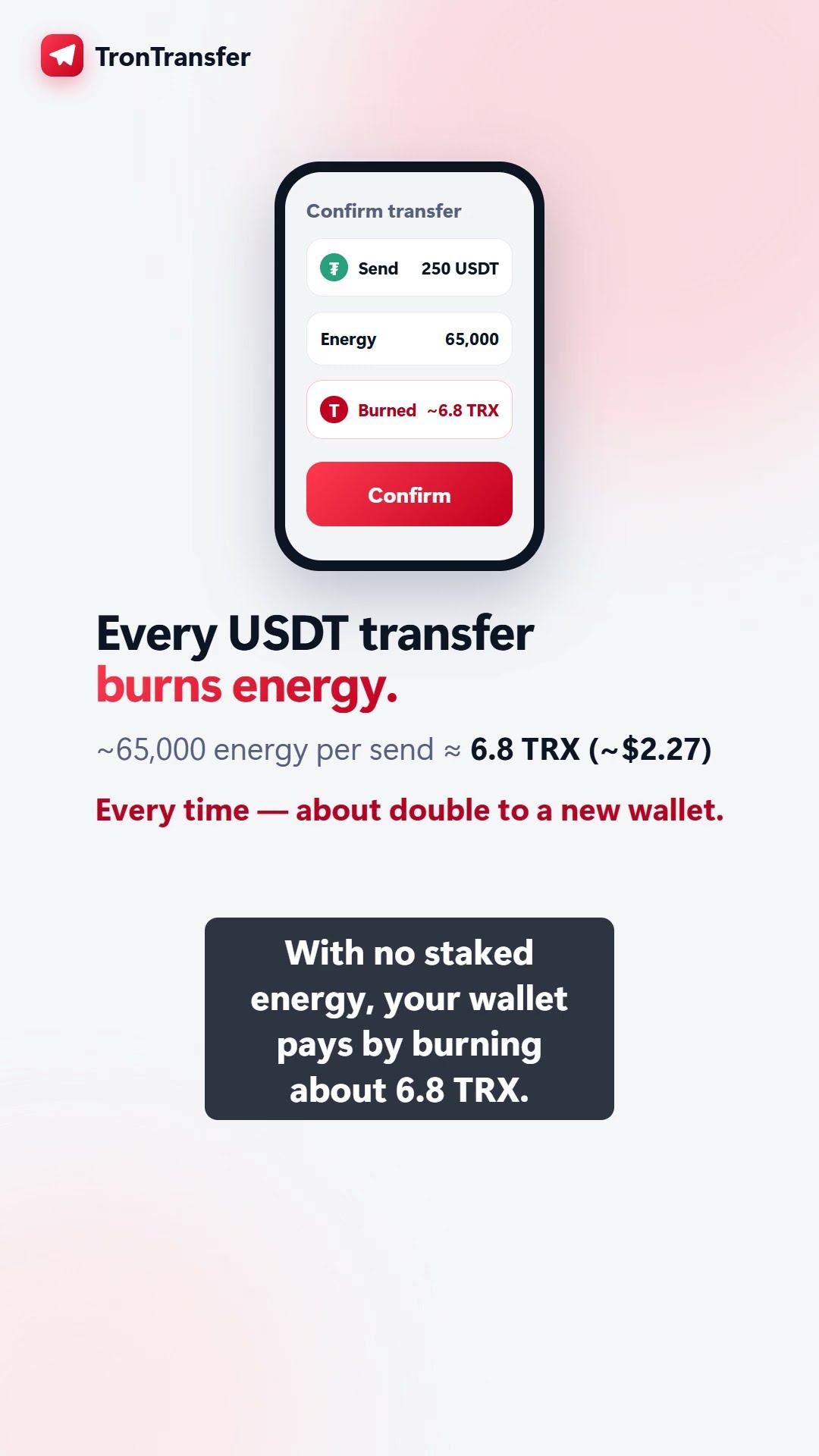
Short answer: energy is the resource TRON charges to run smart contracts such as USDT. A USDT transfer uses about 65,000 energy, or about 131,000 to an address that has never held USDT. If your wallet has no energy, the network burns TRX instead at 100 sun per energy, about 6.5 TRX of energy per transfer today. You get energy by staking TRX or by renting it.
If you send USDT on TRON, you have probably seen the word “energy” — and maybe a worrying “out of energy” message. This guide explains, in plain words, what TRON energy is, why a USDT transfer needs so much of it, and how to send without the stress.
What is TRON energy, in simple words?
Think of the TRON network like a busy post office. Every time you send USDT, the network has to do a little work to process your request. Energy is simply the fuel that pays for that work. There is also a second, smaller fuel called bandwidth, which covers the tiny data cost of your message. You do not need to learn the technical detail — just know that a transfer uses these two things, and someone has to pay for them.
The important part is who pays. If you have plenty of energy, your transfer is smooth and nearly free. If you have none, TRON takes payment out of your TRX balance instead — and that is where the surprise fees come from. (TRX is the coin of the TRON network, a bit like the stamps that keep the post office running.)
Why does a USDT transfer need so much energy?
USDT (Tether, TRC-20) is not built into TRON itself. It is a smart contract — a small program that lives on the network. Because a program has to run each time you move USDT, the cost is higher than sending plain TRX. This is the honest answer to a very common question: why does my USDT transfer cost TRX?
| Type of transfer | Energy needed |
|---|---|
| To a wallet that already holds USDT | about 65,000 energy |
| To a brand-new wallet (first time) | about 131,000 energy |
A brand-new wallet costs roughly twice as much because the network has to set up a fresh record for it. That is why the very first payment to a new customer or family member can feel unusually expensive. Our USDT sending tool handles both cases and shows the fee up front, so there are no surprises.
The three ways to get TRON energy
There are only three ways to cover the energy a USDT transfer needs. Each has trade-offs, and understanding them makes the fees far less confusing.
1. Stake (freeze) your TRX
You can lock up some of your own TRX — the network calls this staking or freezing — and in return you receive free energy each day. This works, but your money is tied up and cannot be spent while it is frozen. For someone who sends only now and then, locking a large amount of TRX rarely makes sense.
2. Rent energy for a short time
Instead of locking funds, you can rent energy just for the moment you need it. This is far cheaper than burning TRX, but doing it by hand for every payment is fiddly and easy to get wrong.
3. Do nothing and let TRON burn your TRX
If you have no staked TRX and no rented energy, TRON simply burns your TRX to pay for the energy. This is the default, and it is the reason fees feel high and unpredictable — a single send can cost anywhere from about $2.26 to $4.45 in burned TRX, depending on how busy the network is. Most people who complain about expensive USDT transfers are quietly paying this burn every time.
“My USDT transfer failed — did I lose my money?”
This is the most common worry, so let us answer it directly and calmly: no, you did not lose anything. When a transfer fails because you are out of energy or short on TRX, nothing moves at all. Your USDT stays exactly where it was — safely in your own wallet.
An “out of energy” or “not enough energy” message is not a loss. It is the network politely saying the fuel has not been paid for yet. Once the energy is covered, the same transfer goes through normally. So take a breath — a failed transfer is a pause, not a disappearance.
How TronTransfer makes it just work
We built TronTransfer so you never have to think about any of this. We rent TRON energy in bulk and sponsor it — energy plus bandwidth — for each transfer you make. A send that normally costs about $2.26 to $4.45 in burned TRX usually costs just ~$1.81 here, ~20% cheaper.
You stay in full control the whole time. TronTransfer is non-custodial, which means your USDT never leaves your own wallet, and you approve every transfer yourself using TronLink, Trust Wallet or imToken. The app always shows the exact fee in TRX and USD before you confirm, so there are no hidden costs.
Every payment is also checked for safety, free of charge. Before you send, we automatically screen the recipient for scams, blacklisted or frozen addresses, and the sneaky address-poisoning trick, where a fake look-alike wallet is planted in your history so you copy the wrong one. If you ever want to check a wallet on its own, our separate AML address check screens any TRON address for sanctions, mixers, scams and darknet links and gives you a clear risk score. It is peace of mind before you press send.
Send USDT cheaply nowWatch the video
Frequently asked questions
My USDT transfer failed and said “out of energy.” Did I lose my money?
No. When a transfer fails for lack of energy, nothing moves and nothing is lost. Your USDT stays safely in your own wallet. The transfer simply needs energy to complete. Once you have enough energy, or you send through a service that sponsors it like TronTransfer, the same transfer goes through normally.
Why does sending USDT need so much energy?
USDT is a smart-contract token on TRON, so each transfer runs a small program, and that program uses energy. A transfer to a wallet that already holds USDT burns roughly 65,000 energy, while a transfer to a brand-new wallet burns about 131,000 energy because extra setup is needed.
What are the ways to get TRON energy?
There are three. You can stake (freeze) some TRX to receive free energy, which locks your funds. You can rent energy for a short time. Or you can do nothing and let TRON burn your TRX to pay for energy, which is usually the most expensive and least predictable option.
How does TronTransfer make transfers cheaper?
We rent TRON energy in bulk and sponsor it, plus bandwidth, for each transfer. A send that normally costs about $2.26 to $4.45 in burned TRX usually costs just ~$1.81 here, ~20% cheaper, and the exact fee in TRX and USD is shown before you confirm.